
April 22, 2026 in German Food Guide
Table of Contents
- What is German pork knuckle?
- Schweinshaxe vs Eisbein
- How to eat it authentically
- The secret to crispy skin
- Best sides
- Where to buy it in Taiwan
What is German pork knuckle?
Schweinshaxe (pronounced sh-vine-HAKS-eh) is a cut from the lower section of the pig's leg, just below the knee. The combination of skin, fat, connective tissue, and muscle is exactly what makes it so flavorful once slow-roasted.
It has peasant origins. Medieval German farmers slow-cooked this tough, inexpensive cut to tenderize it, and the technique evolved over centuries into the crackling-skinned spectacle you find at Oktoberfest beer halls in Munich today. What started as frugal cooking became an icon.
Schweinshaxe vs Eisbein: know the difference
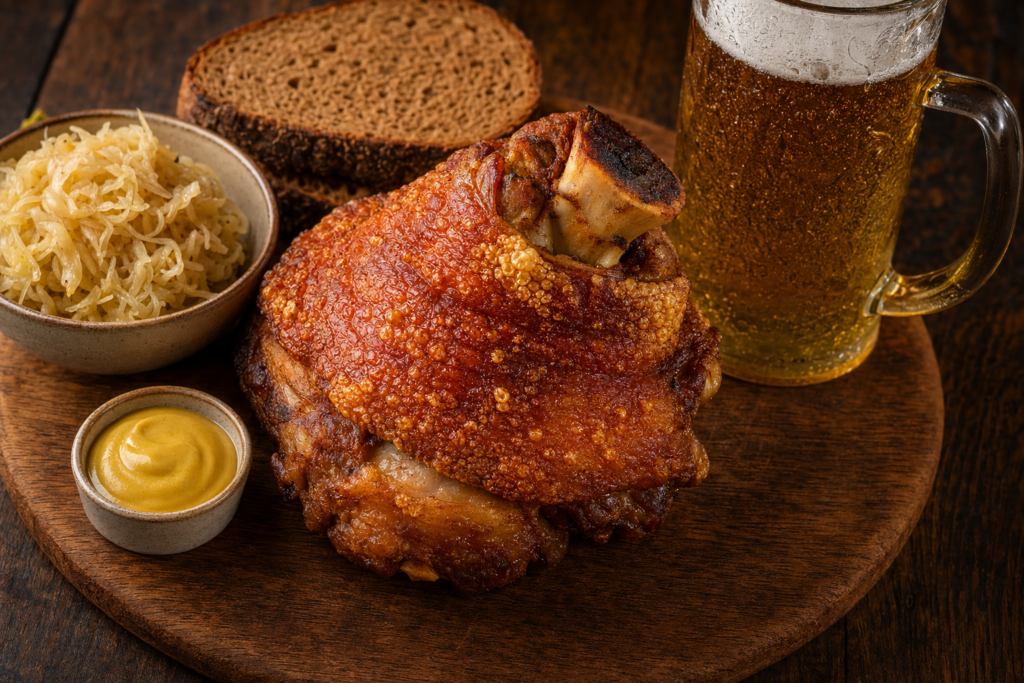
Schweinshaxe (Southern Germany / Bavaria) is the version most people picture. Marinated for days in salt and spices, slow-roasted for hours, then blasted at high heat until the skin shatters. It's the Oktoberfest icon for good reason.
Eisbein (Northern Germany / Berlin) takes a completely different path. The knuckle is cured in brine and simmered low and slow until the skin turns gelatinous and the meat collapses off the bone. No crunch. Instead you get a deeper, saltier, unctuous flavor and a texture that dissolves the moment it hits your tongue. Traditionally served with mushy peas (Erbspüree) and sauerkraut.
Neither is objectively better. Eisbein is a quieter kind of satisfying. Schweinshaxe is a performance — and that's why it sells more outside Germany.
How to eat it authentically
A proper German pork knuckle plate needs three things: mustard, sauerkraut, and something starchy.
The mustard (Senf) is non-negotiable. German mustard is earthier and more complex than French Dijon or American yellow mustard. It cuts through the fat and ties every bite together. Skip it and you're eating half the dish.
Sauerkraut does what the mustard doesn't: it resets your palate between bites with acidity so you actually taste the meat each time rather than just fat. This pairing has been on German tables for centuries because it works on basic flavor logic, not just tradition.
For starch: potato dumplings (Kartoffelklöße) or fried potatoes soak up the roasting juices from the pan. Bread works too.
For drink: a Märzen or Weissbier. The carbonation handles the richness. Wine technically works but it feels wrong.
And yes, eating it with your hands is completely fine.
The secret to crispy skin
Three things determine whether your pork knuckle skin shatters or stays rubbery.
1. Salt and time. Rub the knuckle generously with coarse salt, black pepper, and caraway seeds, then leave it uncovered in the fridge for at least 24 hours. The salt pulls moisture out of the skin. Skip this step and the skin steams instead of crisping.
2. Slow roast first. Roast at 160°C (320°F) for 2.5 to 3 hours. The low heat renders the fat under the skin and collapses the collagen in the meat until it's tender throughout.
3. High heat blast at the end. Crank the oven to 230°C (445°F) for the final 15-20 minutes. This is the step that converts dried-out skin into actual crackling. Brush with beer right before this stage for color and aroma.
If your skin still isn't crisping, your oven is probably running cooler than it reads. Use an oven thermometer.
Best side dishes for German pork knuckle
| Side | German | Notes |
|---|---|---|
| Sauerkraut | Sauerkraut | Fermented cabbage, cuts through fat, rich in probiotics |
| Mustard | Senf | Don't skip this |
| Potato dumplings | Kartoffelklöße | Bavarian staple, perfect for soaking up roasting juices |
| Fried potatoes | Bratkartoffeln | Lard-fried, crispy-edged slices |
| Rye bread | Roggenbrot | For mopping the plate toward the end |
| Braised red cabbage | Rotkohl | Sweet-sour, common at German holiday meals |
Where to buy authentic German pork knuckle in Taiwan
Most German-style food in Taiwan is locally adapted. Little Europe Taiwan is one of the few brands actually run by Germans living in Taipei. Founded at the Taipei German Christmas Market in 2021, they produce everything using traditional German recipes with no artificial additives.
Their pork knuckle comes pre-marinated and ready to cook, cold-delivered anywhere in Taiwan. Pair it with their sauerkraut and German mustard and you have the complete plate without spending three days sourcing and marinating your own. It's the most direct way to get the real thing in Taiwan.
Final Thought
German pork knuckle is not complicated. Good meat, the right technique, the right sides. That combination has worked for centuries across Germany, and it works in Taiwan too. If you haven't tried the real version yet, you now know exactly what to tell the waiter.